Sick Fish? Symptom Checker to Identify What's Wrong
Fish hide illness and decline fast, and many conditions look similar early on, so a calm, systematic look at the specific signs beats panic-dosing. This page helps you narrow it down and points you to detailed guides for the big ones.
Step 1: Test the water (really, first)
Common fish diseases are opportunistic. The bacteria and parasites are usually already present and only take over when a fish is stressed, most often by poor water. Aquatic veterinary references tie bacterial outbreaks directly to stressors like ammonia, low oxygen, and temperature swings.1 Testing and correcting water (a water change, checking your cycle) frequently resolves or halts a problem that looks like a "disease."2 Check: ammonia (should be 0), nitrite (0), nitrate (low), temperature (stable and correct for your species).
Step 2: Match the symptom
| What you see | Likely cause | Guide |
|---|---|---|
| Fins fraying, ragged, or with discolored edges | Fin rot (bacterial, stress-driven) | Fin Rot |
| Tiny white "salt grain" spots on body/fins | Ich (white spot) | Disease guides |
| Swollen body, scales sticking out like a pinecone | Dropsy (serious internal illness) | Dropsy & Odds |
| Floating, sinking, or swimming sideways | Swim bladder issue | Betta Diseases |
| Gold/rusty dusty sheen on the skin | Velvet | Disease guides |
| Cottony white tufts on body or mouth | Fungus / columnaris | Goldfish Diseases |
| Rubbing/"flashing" on decor, clamped fins | Parasites (flukes, ich) | Goldfish Diseases |
Step 3: Decide how to treat
- Correct the water first, many mild cases improve once conditions are fixed.2
- Identify before medicating, match the specific pattern; don't guess.
- Use a hospital/quarantine tank for treatment when possible: it protects your main tank's filter and other fish and lowers stress on the patient.3
- Treat with a targeted product only if needed. And see our honest guide on when antibiotics are actually warranted before reaching for them.
By species
Some problems and care specifics differ by fish. For the two most common home aquarium fish, see our dedicated guides: betta fish diseases and goldfish diseases.
When to get expert help
Prevention: the real cure
- Stable, clean water — regular testing and water changes; don't overstock or overfeed.
- Quarantine new fish before adding them, to catch problems and let them de-stress.2
- Right tank for the species — size, temperature, and compatible tankmates.
- Observe daily — catching the subtle early signs is what makes most fish disease treatable.
Frequently asked questions
How do I know if my fish is sick?
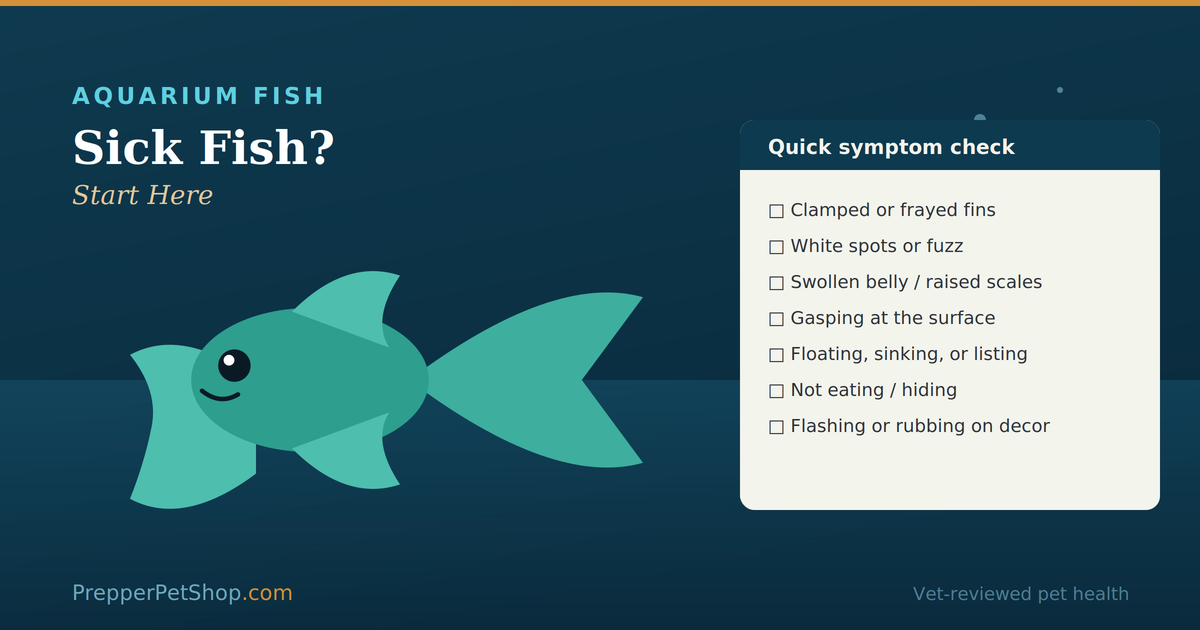
Look for clamped/frayed fins, white spots or fuzz, a swollen belly or raised scales, gasping, abnormal floating/sinking, not eating, hiding, or flashing. Behavior often changes first — then test your water.
Why check water first?
Most fish diseases are opportunistic and triggered by stress, mainly poor water. Correcting water often does more than medicine and is where diagnosis should start.
Most common diseases?
Ich, fin rot, fungus, swim bladder issues, velvet, dropsy, and flukes. Many share early signs, so match the specific pattern.
Medicate right away?
Usually no — identify first and check water. Wrong meds waste money, stress fish, and can crash your filter.
Hospital tank?
Often yes — treat one fish without dosing the whole tank, protect your filter and others, and monitor closely.
Can it spread?
Some (ich, velvet) are contagious; others spread if the cause is tank-wide. Multiple sick fish suggest a shared problem — quarantine new arrivals.
How we reviewed this article
This hub is built around the water-quality-first approach that aquatic veterinary sources emphasize, and it links to individually sourced guides for each major condition. It deliberately steers away from panic-dosing, because the wrong medication is a common and harmful first move. This article was medically reviewed by Dr. Carolina Gutiérrez-Rabadán (DVM, Aquatic Veterinary Medicine) on September 12, 2026. The reviewer verified the clinical accuracy of the guidance; PrepperPetShop is responsible for the final published text.
Sources & references
- Merck Veterinary Manual (as cited in aquatic-health references). Bacterial diseases of fish are strongly tied to stressors: handling, low oxygen, water-quality problems. merckvetmanual.com
- Chewy (aquatic health). Fin Rot in Fish. Tank-health-first framing, distinguishing disease from injury, quarantine, when to contact an expert. chewy.com
- Chewy (aquatic health). Betta Fish Fin Rot. Hospital/quarantine tank use for treating a single fish and reducing stress. chewy.com
Sources current as of September 2026. Educational content for aquarium keepers. For serious or unclear cases, consult an aquatic veterinarian.