Fish Fin Rot: How to Spot It, Stop It, and Treat the Real Cause
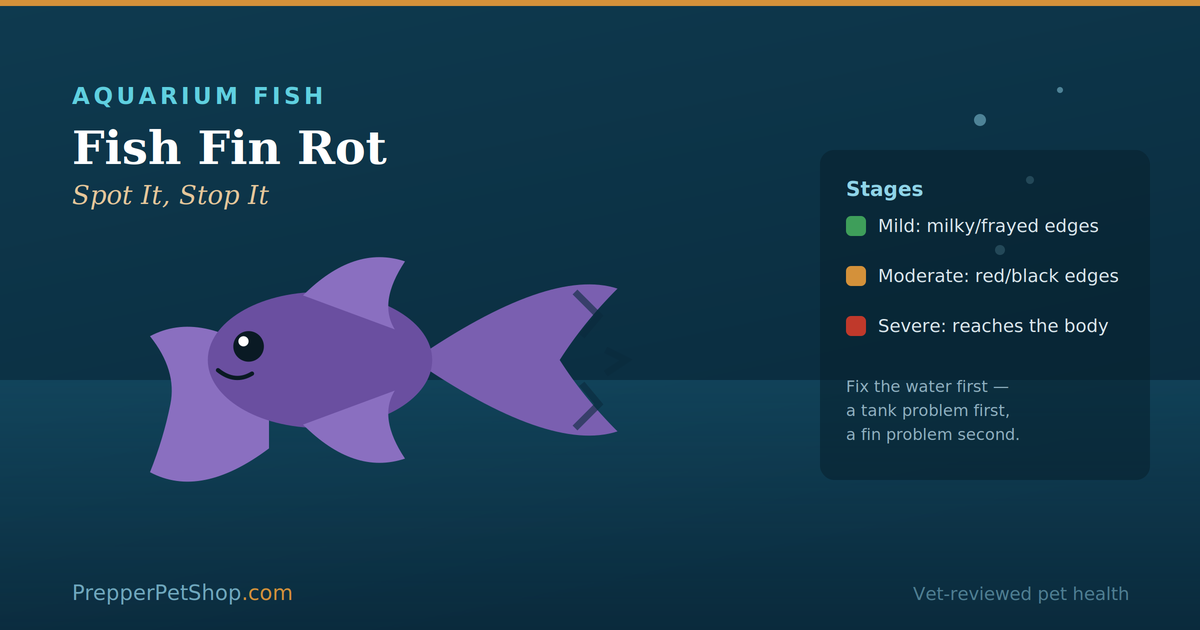
"Fin rot" is one of the most-searched fish problems and one of the most over-medicated. The single most useful thing to understand is that the ragged fins are a symptom of an unhealthy environment. Fix that, and you fix most cases. This guide shows you how to confirm it's really fin rot, read the stage, and treat it in the right order.
What fin rot actually is
It's a bacterial infection, commonly Aeromonas, Pseudomonas, or Vibrio, that breaks down the tissue between the fin rays.4 Those bacteria live in every aquarium; they only cause disease when a fish's immune system is weakened by stress.5 The Merck Veterinary Manual ties bacterial outbreaks in aquarium fish directly to stressors like poor water quality, low oxygen, and improper handling.2 Translation: healthy fish in clean water rarely get fin rot.
Is it really fin rot? (Don't medicate a healthy fish)
Fin rot vs. fin damage
Fin rot: progressive fraying that recedes over time, usually with a distinct discolored edge (white, red, or black) where healthy tissue meets infected, and it keeps getting worse.2
Physical damage (nipping by tankmates, snagging on sharp decor): a clean tear without that spreading discolored margin, and it heals rather than advancing.5
The tell is the discolored, advancing edge. No discolored edge and improving? Likely injury: don't medicate a healthy fish.
The stages
| Stage | What you see |
|---|---|
| Mild | Slight fraying, transparency, or milky/discolored fin tips |
| Moderate | Visible tearing and holes; red, brown, or black edging as tissue dies back |
| Severe | Rot reaches the fin base or body; fins look melted or expose the rays; fish lethargic; risk of secondary fungus and systemic illness |
Catching it at the mild stage makes recovery far easier. And is the difference between fins that regrow and permanent loss.6
How to treat it (in the right order)
1. Fix the environment first
Test the water and do partial water changes; correct ammonia/nitrite (should be 0), high nitrate, wrong or swinging temperature, overcrowding, and aggressive tankmates.3 This is the foundation, and often enough for mild cases on its own.
2. Reduce stress and keep it clean
Stable heat (for tropical fish like bettas, keep it in the correct warm range), a clean tank, and removing anything sharp the fish can snag on. Consider moving the fish to a hospital tank for closer monitoring and to avoid dosing your whole display tank.2
3. Targeted treatment only if it's advancing
For moderate-to-severe cases not responding to improved conditions, a targeted aquarium antibacterial may be needed. Follow the product instructions exactly, remove activated carbon from the filter first (it absorbs medication), do the recommended water changes between doses, and complete the full course even if it looks better, stopping early lets bacteria persist.6 See our honest guide on when aquarium antibiotics are actually warranted before reaching for them.
How long does recovery take?
Once you've corrected the water and stopped the infection's progress, expect a two-part timeline. The rot itself should stop advancing within a few days — the discolored, receding edge stabilizes and stops eating into the fin. That's your first sign it's working. Regrowth is slower: new fin tissue grows back over several weeks, starting as clear or pale membrane between the rays before it fills in and re-colors, so don't panic if the fin looks thin or oddly shaped at first. Keep conditions pristine throughout, because regrowing tissue is fragile and re-infects easily. If the rot is still advancing after several days of corrected water (and targeted treatment, if you started it), that's the cue to reassess the diagnosis or escalate to an aquatic vet — a case that won't stop spreading may involve a more aggressive infection or an ongoing water problem you haven't found yet.
Preventing fin rot
- Keep water pristine — regular testing and water changes; don't overstock or overfeed.
- Stable, correct temperature — especially for tropical species.
- Gentle decor and compatible tankmates — avoid sharp objects and fin-nippers.
- Quarantine new fish — many arrive already stressed or showing early rot.1
For a broader symptom check, start at our sick fish identifier; for species specifics see betta diseases and goldfish diseases.
Frequently asked questions
What causes fin rot?
Usually bacteria (Aeromonas, Pseudomonas, Vibrio) that take hold when a fish is stressed by poor water, crowding, temperature swings, injury, or aggression. It's a water/stress problem first.
Fin rot or just damage?
Fin rot frays and recedes with a discolored (white/red/black) advancing edge; injury is a clean tear that heals. No discolored edge and improving = likely injury; don't medicate.
The stages?
Mild (milky/frayed tips), moderate (tearing, red/black edges), severe (reaches body, fish lethargic). Early is far easier to fix.
How to treat it?
Fix the water first (changes, correct parameters), reduce stress, keep clean; for advancing cases use a targeted antibacterial in a hospital tank and finish the course.
Will it heal on its own?
Very mild cases can, once the cause is fixed; established rot needs active care and worsens if ignored.
Do fins grow back?
Usually, if stopped before the base — over weeks, sometimes slightly different at first. Body-level loss may be permanent.
Is it contagious?
Opportunistic more than contagious; healthy fish resist it, but a tank-wide cause (bad water) can affect several. Multiple sick fish = treat the tank.
How we reviewed this article
This guide follows aquatic-health sources (Chewy, Petco) and the Merck Veterinary Manual's framing of bacterial fish disease as stress-driven. We lead with water quality and with distinguishing fin rot from injury, because over-medicating a healthy or environmentally-stressed fish is the most common mistake on this topic. This article was medically reviewed by Dr. Carolina Gutiérrez-Rabadán (DVM, Aquatic Veterinary Medicine) on September 12, 2026. The reviewer verified the clinical accuracy of the guidance; PrepperPetShop is responsible for the final published text.
Sources & references
- Chewy. Fin Rot in Fish. Tank-health-first framing, not every torn fin is fin rot, quarantine, when to contact an expert. chewy.com
- Chewy / Merck. Betta Fish Fin Rot. Merck ties bacterial outbreaks to stressors; stages; hospital tank; correct environment first. chewy.com
- Petco. Fin Rot: Causes, Symptoms & Treatment. Water-quality causes (ammonia/nitrite/oxygen), assess environment first, staging. petco.com
- Aquarium Essentials. What Is Fin Rot Disease. Causative bacteria (Pseudomonas, Aeromonas, Vibrio), progression to body, early-detection importance. aquarium-essentials.com
- Bettafish.org / Aquacadabra. Distinguishing fin rot from fin-biting/injury (discolored edge tell); opportunistic, not highly contagious. bettafish.org
- Aqulator. How to Treat Fin Rot. Remove carbon, targeted antibacterial, complete full course, water changes between doses; regrowth. aqulator.com
Sources current as of September 2026. Educational content for aquarium keepers. For serious or non-responding cases, consult an aquatic veterinarian.