Bumblefoot in Chickens: Stages, Treatment, and When to Worry
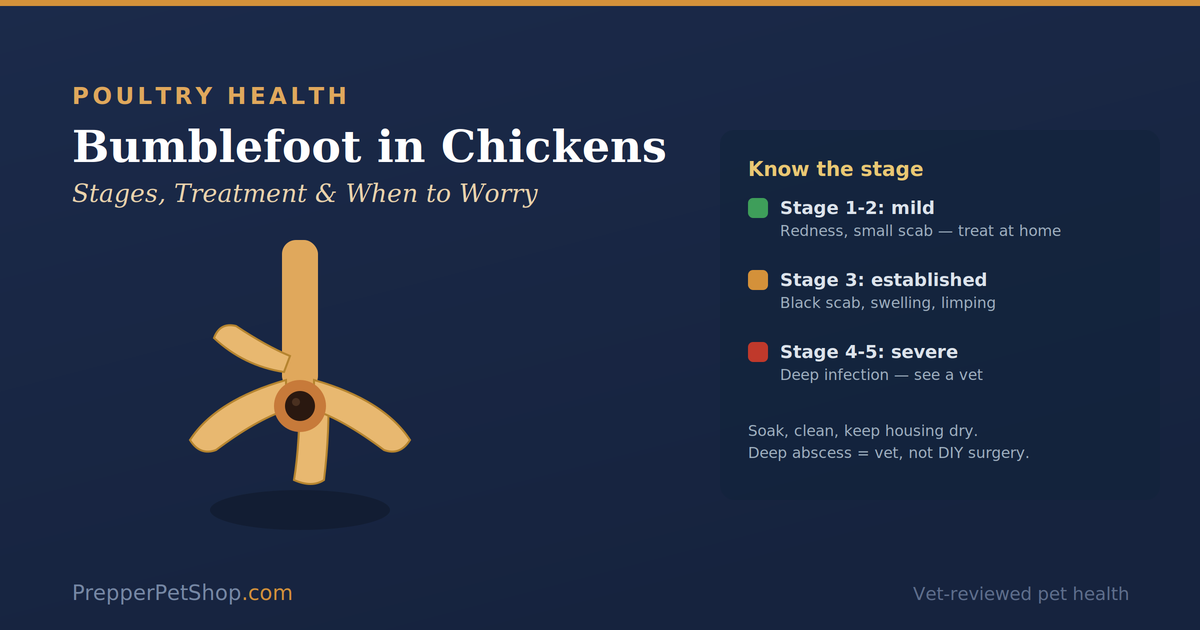
Bumblefoot is one of the most common backyard-flock foot problems, and the good news is that caught early it's very manageable. The key is reading the stage honestly. Knowing which cases you can handle at home and which need professional care, and fixing the coop conditions that caused it, since it's largely a husbandry problem.
What bumblefoot is
Bumblefoot, medically plantar pododermatitis: is a bacterial infection of the bottom of the foot, most often from Staphylococcus aureus (sometimes E. coli) entering through a break in the skin.1 The infection walls off into a firm, pus-filled abscess capped by a characteristic dark brown or black scab, with swelling, heat, redness, and pain that makes the bird limp.3 It most commonly hits the large central pad, and if ignored it can extend into the tendons, joints, and bone (osteomyelitis). Which is why staging and early action matter.1
How to recognize it, and the stages
The stage guides everything, so look closely at the foot:
| Stage | What you see | Approach |
|---|---|---|
| 1–2 (mild) | Early redness, a small scab, mild swelling; bird walks fairly normally | Treatable at home2 |
| 3 (established) | Firm dark/black scab, clear swelling, limping | Home care may work; watch closely, vet if unsure |
| 4–5 (severe) | Big swelling, heat, pain, reluctance to walk; possible spread to tendons/bone | See a vet, needs debridement ± antibiotics1 |
For advanced cases, a vet may use radiographs to see how deep the infection goes and guide treatment.1
Treating a mild case at home
For an early, superficial case (stage 1–2):2
- Soak the foot in warm water with Epsom salt for 10–15 minutes to soften the pad and draw down swelling. Repeat daily.
- Clean the area with a gentle antiseptic (e.g., a dilute chlorhexidine or a poultry-safe wound solution).
- Keep it dry and clean. Move the bird to clean, dry bedding: dirty litter reinfects the wound.
- Optional dressing. Some keepers apply a poultry-safe antibiotic ointment, cover with non-stick gauze, and wrap with vet tape, re-applying until healed.3
- Fix the cause. A very mild case can resolve just from correcting the perches or bedding that caused it. But most need active care too.2
The honest truth about "bumblefoot surgery"
Search results are full of graphic videos of people cutting the core out of a chicken's foot at the kitchen table. Here's the honest guidance: for anything beyond a superficial scab, that DIY excision is painful, risks driving infection deeper or removing it incompletely, and exposes you to staph.3 Experienced keepers do treat mild cases at home, and some resolve without ever cutting, but deep, abscessed, or established cases belong with a vet, who can debride properly, give pain relief, and prescribe antibiotics if needed.3 Cutting into a chicken's foot isn't a beginner's first move.
Do antibiotics help?
Not always. Many mild cases resolve with soaking, cleaning, and clean dry housing — and some experienced keepers report clearing cases without antibiotics at all.3 But established or deep infections often need antibiotics prescribed by a vet, sometimes alongside surgical debridement, particularly if the infection has reached deeper tissue.1 A vet can decide whether antibiotics are warranted and choose ones appropriate for a bird that may produce eggs or meat — an important consideration with food-producing animals.
What causes it (and why prevention is mostly husbandry)
Bumblefoot starts when the footpad skin breaks and bacteria get in. Common triggers and risk factors:14
- Rough or wire flooring, splinters, hard landings off high roosts.
- Heavy body weight — more pressure on the pads (heavy breeds are more prone).
- Overgrown nails and poor foot conformation.
- Dirty, damp coop conditions.
- Vitamin A deficiency and poor nutrition.
Preventing bumblefoot
- Smooth, correctly-sized perches — no sharp edges or narrow wire; give feet a natural grip.
- Lower roosts or add ramps to cut hard landings.
- Clean, dry bedding, changed regularly.
- Trim nails and manage body weight.
- Good nutrition, including adequate vitamin A.
- Inspect feet regularly — catching a lesion at stage 1 is far easier than treating stage 4.4
Not sure a foot problem is bumblefoot? Start at our sick chicken symptom checker to compare it against other issues.
Frequently asked questions
What is bumblefoot?
A staph infection of the footpad (plantar pododermatitis), usually from a cut or bruise letting bacteria in. Shows as a swollen pad with a dark scab and a limp; can spread deep if ignored.
What are the stages?
Stage 1–2 mild (redness, small scab, normal walking — home-treatable), stage 3 established (dark scab, swelling, limping), stage 4–5 severe (deep, painful, possible bone involvement — vet).
How do I treat it at home?
Mild cases: Epsom soak 10–15 min, clean with antiseptic, keep on clean dry bedding, optionally dress it, and fix the perches/bedding that caused it. Deep cases need a vet.
Should I do surgery myself?
Only superficial scabs, if at all — deeper DIY excision is painful, risky, and exposes you to staph. Deep abscesses go to a vet.
Does it need antibiotics?
Not always — many mild cases resolve without them; established/deep infections often need vet-prescribed antibiotics, sometimes with debridement.
Is it contagious?
Not bird-to-bird like a disease, but shared rough perches/dirty bedding can affect several birds. The staph can infect people — wear gloves.
When to see a vet?
Hot, severely swollen foot; very lame bird; deep or non-improving infection; or signs of spread. Advanced cases need professional debridement and pain control.
How we reviewed this article
This guide follows Today's Veterinary Practice, poultryDVM, and experienced-keeper sources, and it's deliberately honest about the limits of home treatment — especially the popular DIY "surgery," which we steer most owners away from in favor of soaking, husbandry fixes, and a vet for deep cases. Every clinical claim is numbered to a source below. This article was medically reviewed by Dr. Mikel Sabater González (LV, CertZooMed, DipECZM(Avian), MRCVS) on September 13, 2026. The reviewer verified the clinical accuracy of the guidance; PrepperPetShop is responsible for the final published text.
Sources & references
- Today's Veterinary Practice. Management of Bumblefoot in Chickens. Pathophysiology, staph/E. coli, progression to tendons/bone/osteomyelitis, staging, radiographs, husbandry causes. todaysveterinarypractice.com
- Veterinary-reviewed keeper guidance (Alyssa Rauton, DVM). Bumblefoot Stages & Treatment. Stage-based home-vs-vet decision, Epsom soak, antiseptic, clean dry housing, mild cases resolving with husbandry fixes. southlandorganics.com
- The Chicken Chick. Bumblefoot: Causes & Treatment. Superficial vs advanced treatment, surgery reserved for stubborn cases, gloves for staph risk, many cases needing no antibiotics. the-chicken-chick.com
- poultryDVM. Bumblefoot (Pododermatitis). Predisposing factors (body size, wounds, overgrown nails), signs, prevention through housing and management. poultrydvm.com
- Nutrena / Chicken Coop Company. Bumblefoot causes, symptoms, Epsom-salt and debridement treatment, isolation and coop hygiene. chickencoopcompany.com
Sources current as of September 2026. Educational content for flock keepers, not a substitute for veterinary care. For food-producing birds, consult a vet about appropriate medications and withdrawal periods.